Wednesday, February 16, 2022

Take a Break: Watch Throw Down Your Heart


February is black history month, so it’s the perfect time to watch the film “Throw Down Your Heart.”


Bela Fleck, one of the world’s greatest banjo players, decided to bring the banjo back to Africa, which is where it originated. Throw Down Your Heart documents this journey.


The banjo likely evolved from the akonting, a hide-covered gourd with three strings attached to a pole, brought by enslaved Africans to America. “Throw down your heart” is a translation of the Kiswahili word “Bagamoyo,” the name of the port in Tanzania where natives, captured inland, were loaded onto ships as chattel. Legend has it, that this was the last glimpse of the African soil slaves would get before being abducted and shipped across the Indian ocean to the Americas, Egypt or some other shores by Swahili slave traders in the 19th century. The name is reflecting the desperation and despair of the ‘broken hearted’ captives.


The music and scenes of Africa are uplifting and will keep you warm during these cold February days.


Not interested in today’s activities, try the Take a Break Pinterest Board.


Saturday, February 12, 2022

Life With Chronic Conditions: Asset Frame for Better Health


I’ve left more than one medical appointment frustrated and having a lower opinion of myself because a lab test or some other measurement isn’t up to snuff. After a conversation with a physician friend, I got it that I need to be clear of my assets and that in many ways they are more powerful and important than the “numbers”  I’m aware that being mortal that this will not always be the case, but when living with a chronic condition, it’s important to lead with our assets before we become overwhelmed by the deficits.


Medical providers are often so focused on problem solving care, they are more concerned with the problems, needs and deficiencies and ignore the very things that can help us heal and have a powerful influence in our lives. We need to remind ourselves and our care providers that we do have assets and it’s helpful to note them. Accentuating the positive capabilities and nurturing the strengths and resources of people can help them activate solutions for health and well-being that promote their self-esteem and resilience.


Susan Pinker’s TED Talk is an eye opener about what assets keep us living longer and enrich our lives.  


 Referring to the research of Julianne Holt-Lunstad she lists from the least predictive to the most predictive of what influences longevity. Clean air is at the bottom of list. Moving up weight (doesn’t have the impact we might think). Exercise is a moderate predictor, cardiac event with rehab is next followed by getting a flu vaccine, stopping drinking and smoking and so forth. However, the top two predictors of living longer were close relationships and social integration. Pinker describes social integration as follows, This means how much you interact with people as you move through your day. How many people do you talk to? And these mean both your weak and your strong bonds, so not just the people you're really close to, who mean a lot to you, but, like, do you talk to the guy who every day makes you your coffee? Do you talk to the postman? Do you talk to the woman who walks by your house every day with her dog? Do you play bridge or poker, have a book club? Those interactions are one of the strongest predictors of how long you'll live.


The UK has been studying asset based health care for decades, which they have summarized as “head, hands and heart.” Starting with these three questions, I’ve added some more to help identify what your assets might be.


As you start to answer these questions, don’t limit the assets to just yourself. You are most likely part of a family and community so include networks and resources of both. For example, having a park near your home where you like to walk with a friend(s) is an important asset.


What are my Assets?

-       What knowledge do you have?  (Head)

-       What skills do you have? (Hand)

-       What are you passionate about? (Heart)

-       Do you consider yourself resilient? (having the ability to bounce back from difficult situations) If you need some help in deciding if you are resilient, try the How Resilient Are You? Test. https://www.nwpgmd.nhs.uk/sites/default/files/resiliencequestionnaire.pdf

-       Do you have a sense of purpose?

-       Do you like learning?

-       Are there physical places in your community that support health and well-being such as parks, sidewalks, gardens, playgrounds, trails, picnic areas, fishing spots etc.?

-       Are there organizations that can be source of help, socializing etc.? Consider community based organizations, book club, library, civic event groups, continuing education, senior centers etc. 

-       Do you spend time with friends and family, talking to them, eating together, bonding, and enjoying one another’s company?

-       Do you have at least three stable relationships?

-       Are you socially engaged?

-       Do you have “buddies” on whom you can rely?

-       Do you own a pet?

Saturday, February 5, 2022

Olympian Alternative Therapies: Focus on Traditional Chinese Medicine


For 13 years I worked in first aid at our local winter resort. The Olympics were a double edged sword. On the one hand, we spent a lot of our down time talking about it, particularly since we knew various ski and snowboard athletes. However, there was less down time as the injuries escalated with kids and adults trying to be Olympians.


Watching the games, we learn a lot about the  fitness training and other facts about individual athletes. With the Beijing Winter Olympic games just underway, we’ll be seeing a lot of alternative “health,” “well-being,” and “injury prevention” strategies that various athletes swear by. So what works and what’s probably a placebo effect?


For starters, unless you train like an Olympian, please don’t "try this at home." Want to try a sport for the first time, consider taking a lesson(s). If you want to try some of the alternative treatments they use, talk to your medical provider first.


Some of the “take homes” from the Olympic training centers are true for everyone to function at their peak, such as regular exercise (30 minutes walking daily is good); rest and adequate sleep (6-8 hours appears to be the sweet spot); healthy diet (Mediterranean diet is considered to be among the healthiest in the world); hydration and Make time for fun: The adage of “All work and no play makes Jack a dull boy” is well stated.


For the 2016 Olympics, I posted an article Cupping, LumiWave, Cyrochamber, Massage: Good for Olympians but Right for Me?”  What's been learned about these various strategies since 2016:

-       Cupping: Pretty much still the same-might be helpful for pain, though the research isn’t that strong.

-       Massage: Helpful for acute low back pain but not for chronic. Might be helpful for neck, shoulder, or knee (osteoarthritis) pain. Certainly is relaxing and helps with reducing stress.

-       Kinseology Tape: Continues to be popular with athletes and physical therapists

-       LumiWave: Seems to have fallen out of favor.

-       Compression Sleeves: Researchers analyzed 183 studies evaluating their efficacy and found that while they may not be as useful as some claim, there is also very little harm in using compression gear. The researchers found compression garments caused no meaningful change in the wearers’ metabolic responses, blood pressure, heart rate or other cardiorespiratory measures, nor did they improve the users’ movements or rates of perceived exertion.

-       Cyrochamber Therapy: it’s hard to know if whole body cryotherapy reliably prevents or treats any particular condition, or if it speeds recovery or improves athletic performance. And even if it did, there’s little proof that it’s more helpful than much less expensive cryotherapy options, such as simply applying ice to a sore area. Definitely not appropriate for anyone with the following: poorly controlled high blood pressure, heart or lung disease; poor circulation; allergy symptoms triggered by cold; neuropathy in the legs. Harvard Health Blog


As noted in the 2016 post,..the placebo effect is very much a factor. If an athlete has won a game having just drunk beet juice or used a particular hairband, they will continue to do that in the belief that it makes a difference.


While Olympians excel, and are the best in the world for their sport, they are susceptible to unproven alternative therapies.


Because the Olympics are in Beijing, expect to see more about various Traditional Chinese Medicine practices (TCM) that are in use. Note that cupping and massage are still popular. Read the 2016 post if you want to know more about them.


Acupuncture: Practitioners stimulate specific points on the body—most often by inserting thin needles through the skin. Results from a number of studies suggest that acupuncture may help ease types of pain that are often chronic such as low-back pain, neck pain, and osteoarthritis/knee pain. It also may help reduce the frequency of tension headaches and prevent migraine headaches. Acupuncture appears to be a reasonable option for people with chronic pain to consider. NCCIH 


Chiropractic spinal manipulation: It’s a technique where practitioners use their hands or a device to apply a controlled thrust (that is, a force of a specific magnitude or degree in a specific direction) to a joint of your spine. The amount of force can vary, but the thrust moves the joint more than it would on its own. Spinal manipulation is different from spinal mobilization, which doesn’t involve a thrust (and is performed within a joint’s natural range of motion and can be controlled by the patient). Spinal manipulation is relatively safe when performed by a trained and licensed practitioner. The most common side effects of spinal manipulation are temporary muscle soreness, stiffness, or a temporary increase in pain. Appears to be a good option for the treatment of chronic lower back pain. National Library of Medicine


Moxibustion. Involves burning moxa, a cone or stick made of ground mogwort leaves, on or near the body’s meridians and acupuncture points. Practitioners believe that the resulting heat helps stimulate these points and improves the flow of qi (energy) in your body. According to TCM practices, this increased qi circulation can help with a range of health issues, from chronic pain to digestive troubles. There’s moderate evidence for the effectiveness of moxibustion in pain and symptom management in knee osteoarthritis. Additional research has shown that when combining moxibustion with acupuncture, there’s an increase bone density in patients with osteoporosis. A 2020 review of studies concluded moxibustion and acupuncture can increase bone density and may reduce pain.


Qigong/Tai Chi: To show “local color,” chances are there will be footage of people exercising in the various Beijing parks. These are slow moving moves that are easy to do and can be modified. At least 4,000 years old, Qigong is based on TCM principles Various studies have found that Qigong can reduce depression, relieve stress, lessen chronic fatigue, improve immune function and improves well-being. Learn more at the Qigong Institute.


Tai Chi stems from Qigong and may have been practiced in some form dating back 2,500 years. These meditative body movements were originally designed for self-defense and to promote inner peace and calm. According to the National Center for Complementary and Integrative Health Practicing Tai chi may help to improve balance and stability in older people and in those with Parkinson’s disease, reduce back pain and pain from knee osteoarthritis, and improve quality of life in people with heart disease, cancer, and other chronic illnesses. Tai chi and qi gong may ease fibromyalgia pain and promote general quality of life. Qi gong may reduce chronic neck pain, but study results are mixed. Tai chi also may improve reasoning ability in older people. NCCIH


While not part of traditional Chinese medicine, Hyperbaric Oxygen Therapy (HBOT) is becoming increasing popular among athletes.  HBOT involves breathing pure oxygen in a pressurized environment. It is a well-established treatment for decompression sickness, a potential risk of scuba diving. Other conditions treated with hyperbaric oxygen therapy include serious infections, bubbles of air in your blood vessels, and wounds that may not heal as a result of diabetes or radiation injury. Professional athletes are increasingly receiving HBOT to help them recover from many types of injuries, including joint pain, torn muscles and tendons, and even concussions. Some athletes use HBOT to stay in optimal condition, maximize their performance, and prevent injuries. Olympian Michael Phelps was shown entering a HBOT chamber to help his body recover. However, HBOT is not cheap and you’ll need to find a facility, such as a hospital, that has a chamber. Mayo Clinic

Wednesday, February 2, 2022

Take a Break: Try a Guided Meditation with Thich Nhat Hanh


With the recent passing of Thich Nhat Hanh it’s a reminder to practice mindfulness. If you are not familiar with Thich Nhat Hanh, he was a global spiritual leader, poet, and peace activist, renowned for his powerful teachings and bestselling writings on mindfulness and peace. A gentle, humble monk, Dr. Martin Luther King, Jr. called him “an Apostle of peace and nonviolence” when nominating him for the Nobel Peace Prize. Exiled from his native Vietnam for almost four decades, Thich Nhat Hanh has been a pioneer bringing Buddhism and mindfulness to the West, and establishing an engaged Buddhist community for the 21st Century. Learn more about him at Plum Village’s, the monastery he established, website.

This is one of his guided meditations. 


This past Sunday Krista Tippett, host of On Being, featured Remembering Thich Nhat Hanh, Brother Thay.  This is a podcast that can be listened to or read, as a transcript is provided.


Not interested in today’s activities, try the Take a Break Pinterest Board.


Wednesday, January 26, 2022

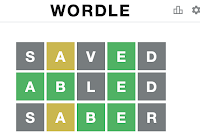
Take a Break: Try Wordle


If you haven’t heard of Wordle,  the task is to guess a five-letter word. You have six tries. After each guess, the tiles change colors to show which letters are not in the word (gray), which letters are in the word but in the wrong position (yellow) and which ones are correctly in the word and in the right position (green).


Josh Wardle, a software engineer, developed Wordle for his partner, who is a fan of word games. What’s so nice about it is there are no adds or gimmicks. Don’t have to sign up, provide any personal information, give an e-mail etc.


NPR recently had an article about it, which you can read by clicking here.


There are now Facebook groups, videos and various tips on how to guess the right word. For example, you can figure out which vowels are in the word by starting with “adieu.”

Not interested in today’s activities, try the Take a Break Pinterest Board.

Saturday, January 22, 2022

Life with Chronic Conditions: Financial Planning


Financial planning should be part of everyone’s life, but it takes on a particular meaning for those affected by a chronic condition. While it can be pushed into the background during an acute episode, it can also be front and center interfering with daily life. How will I get by? What happens if I can’t be cared for at home? What if I can’t work? These are just a few of the questions people ask themselves. However, developing a financial plan, that you regular review and modify as things change, can help put order to what can feel like financial chaos.


Below are some steps to consider in developing a financial plan

1. Don’t go it alone: There are any number of people who can help you. They will know about special programs, be it for housing, food, medicine, rides, health insurance, disability insurance, long term care etc. Just as it’s good to have an advocate to help you navigate the health care system, there are people who can help you plan a more financially secure future.


Your medical provider may already have contacts you can use, so don’t be afraid to bring up that you need help with finances.  They understand all too well how money can impact your choices in care. People who can help include:

-       Social worker, case manager at the hospital or health facility where you receive care

-       Local chapter of condition specific organization e.g. National Parkinson’s Disease Association Many of these organizations have programs, workbooks as well as staff that can assist you such as the Alzheimer’s Association Financial andLegal Planning for Caregivers. Check Medline’s list of organizations to find the organization that covers your particularly health issue.

-       Local office on aging-This service is usually for those 60+ and many offer case management services. If you are a caregiver and your charge is 60+ they can provide assistance. Find what is available in your state by clicking here. 

-       Centers for Independent Living: Every state has an independent living center that provide an array of services. Click here for your state center.

-       Veterans can get help from a variety of sources. Check out the financial assistance links from Veterans Families United.

-       Medicare.gov Check out the options under Talk to Someone 

-       Local Church

-       Community action agency:  Local private and public non-profit organizations that can connect you with national, state and local program. Use the following link to learn about CAAs in your area

-       Human Resources: If you are employed talk to your companies human resources about benefits, retirement packages etc.

-       Financial counselor

-       211This is a free and confidential service available throughout the country to assist you in finding the help you need. By calling 211 you will be connected with your local service.


2. Create a Budget: Regardless of who you work with, understanding both income and expenses will be necessary. It’s important that you are honest in what you expect your income to be as well as what your expenses are and/or might be in the coming months. Going through the exercise below will be a big help.  


To begin this process, have all of your financial paperwork in one place including bank statements, investment accounts, bills (utilities, rent, mortgage, car, school loans, lay-a-way plans, childcare etc.), paystubs, taxes, credit card bills, receipts from the last three months

A.    Calculate your income. How much money can you count on each month? This includes net income from work, Social Security, disability, investment income, child support, alimony, other people in your household’s income etc. If you are self-employed, consider using the income from your lowest-earning month in the past year as your baseline income. Calculating your monthly income worksheet

B.    Calculate Monthly Expenses: As you calculate your monthlies, use receipts, bank statements from the last several months to help with accuracy. Since some areas, such as food, gasoline, can vary from month to month, use an average for the last several months

a.    Mortgage, rent

b.    Car payment

c.     Insurance (home, health, life)

d.    Food: Divide into two categories, groceries and “take out”-meals from fast food, coffee etc.

e.    Utilities (water, electricity, phone, Internet, cable, TV)

f.      Personal  care includes massages, gym membership as well as items such as vitamins and other care items

g.    Child and/or adult care

h.    Transportation costs such as gas, car maintenance, Uber etc.

i.      Student loans/school fees

j.      Other loans you might have

k.     Medical: Expenses/co pays for doctors visits, dental care, durable medical supplies, disposable products, prescriptions, over the counter medications etc.

l.      Savings-If you try to put money aside each month

m.   Entertainment

n.    Credit card payment

o.    Upcoming expenses that need to be planned for: Such as upcoming dental procedure, possible need for long term care.

Check out the worksheet Make a Budget.  Very user friendly.

C.   Tally monthly Income and Expenses: Are you living within your means or over extended? If you are living beyond your means, check out the following:

a.    Ways to Save on Monthlies

b.    Living within your means: Un stuff yourself

c.     Health Costs: When You Have Some money But Not Enough 

d.    Check Your Medical Bills 

e.    I Can’t Afford My Meds 

f.      Shop Around for the Best Pharmaceutical Prices 


3. Financial Power of Attorney: A power of attorney can speak and act for you if you are incapacitated. There are multiple types of decisions that they can be given, including health care choices and financial decisions. While many tasks can be included under power of attorney or durable power of attorney, you can divide these tasks so one person is the health proxy (can speak for you about health care decisions if you are unable to do so) and another deals with finances etc. You can begin this discussion with those listed under section 1, but it’s recommended that you use a lawyer to finalize decisions and draw up the necessary paper work. If you can’t afford a lawyer, consider using Legal Aid.


Other Reading

Parkinson’s Foundation Financial Planning

Financial and Estate Planning for the Parkinson’s Community 

Alzheimer’s Association Financial and Legal Planning for Caregivers

When a Diagnosis Demands a Long-Term Money Strategy 

Wednesday, January 19, 2022

Take a Break: Be inspired by Snowflake Bentley


We have a lot of snow in Vermont, so thought this was a good week to introduce one of our own- Wilson A. Bentley, better known as “Snowflake” Bentley.


A farmer by trade, Bentley lived his entire life in Jericho VT. While some of his prints of snowflakes are in the collection of the Metropolitan Museum of Art, his pioneering work in photomicrography, showed that no two snowflakes are alike.


What magic is there in the rule of six that compels the snowflake to conform so rigidly to its laws? Here is a gem bestrewn realm of nature possessing the charm of mystery, of the unknown, sure richly to reward the investigator. For something over a quarter of a century I have been studying it and the work has proved to be wonderfully fascinating, for each favorable snowfall, during all these years has brought things that were new and beautiful to my hand. I have never yet found a time when I could entertain an idea of relinquishing it. During the time that I have carried on the work, I have secured sixteen hundred photo-micrographs of snow crystals alone, and no two are alike. Is there room for enthusiasm here? Doubtless these pictures serve to represent with some fairness almost every type and variety of snow that occurs in nature, but they show scarcely an infinitesimal fraction of the individual variation of form and interior design among the countless myriads of crystals comprising each type. Snow Beauties by Wilson A. Bentley  https://snowflakebentley.com/snow-beauties


Watch the following video to learn more about him.


Study snowflake prints made by Bentley.


Make your own Snowflake Bentley Prints inspired by Mary Azarian


Not interested in today’s activities, try the Take a Break Pinterest Board.